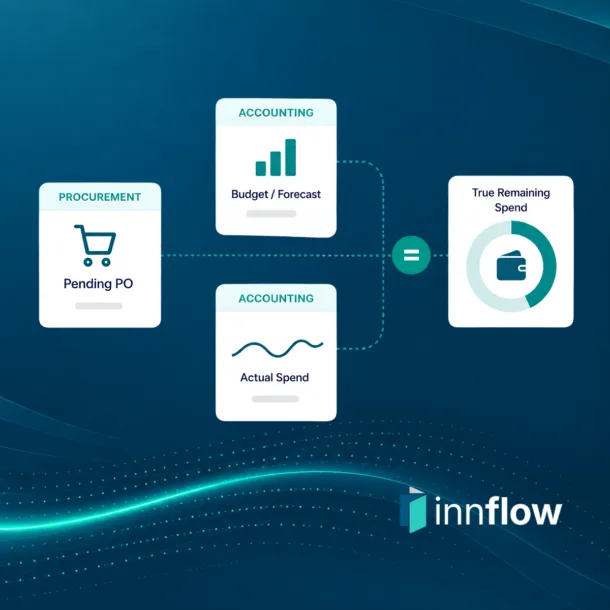
Hotel month-end close takes too long because hotels generate financial data from more sources than most industries, and those sources are rarely synchronized. The PMS posts revenue. The payroll system posts labor. The AP system holds invoices. The bank holds settlements. When these systems do not talk to each other, the accounting team manually bridges the gaps — and that takes time.
Key Takeaways
- Hotel month-end close involves reconciling revenue, AP, payroll, bank, and intercompany data from separate systems.
- The five root causes are: manual revenue posting, fragmented AP, payroll timing gaps, intercompany reconciliation, and poor daily close discipline.
- Multi-property portfolios amplify every bottleneck — one late property delays portfolio-level close.
- Slower close means delayed owner reporting, less time for analysis, and more pressure on controllers each month.
- The path to faster close starts with daily reconciliation discipline and system integration, not just more staff.
What Hotel Month-End Close Covers
Month-end close in a hotel is the process of finalizing all financial transactions for the period, reconciling accounts, posting accruals, and producing financial statements. In a single-property operation, this covers revenue verification, accounts payable cutoff, payroll posting, bank reconciliation, accrual entries, and the final income statement and balance sheet.
In a multi-property operation, every property goes through this process, and the results must be consolidated into portfolio-level financials with intercompany eliminations. Each step that takes an extra day at the property level multiplies across the portfolio.
Why Hotel Month-End Close Is More Complex Than Other Industries
Hotels earn revenue from multiple streams simultaneously: rooms, food and beverage, meeting space, parking, spa, and ancillary services. Each stream has its own revenue recognition pattern, its own settlement timing, and its own reconciliation requirements. A manufacturer reconciling one revenue stream has a fundamentally simpler close.
Hotels also operate around the clock. Transactions from the last day of the month may not settle until the first few days of the next. Night audit cutoffs, credit card batches, and group folio billing cycles do not align perfectly with the calendar. Every one of these timing mismatches requires a manual decision or accrual entry.
The labor management component adds another layer. Hotels are highly labor-intensive, and payroll is typically the largest expense line. If payroll periods do not align with the accounting period, accruals must be calculated and posted manually. Any variance between hours scheduled, hours worked, and hours paid creates a reconciliation requirement.
Five Root Causes of a Slow Hotel Month-End Close
1. Manual PMS-to-GL Revenue Posting
The most common bottleneck is the gap between the property management system and the general ledger. When revenue does not post automatically from the PMS to the accounting system, someone has to export it, format it, and import it — or key it manually. This happens every day of the month. Over 30 days, that accumulation of manual transfers creates a backlog of potential errors that has to be resolved at close.
Purpose-built hotel accounting software eliminates this by integrating directly with the PMS and posting revenue to the correct GL accounts automatically each night. When that integration exists, revenue reconciliation at month-end is a verification step rather than a data entry project.
2. Fragmented Accounts Payable
AP cutoff is a persistent pain point. Invoices that arrive after month-end but belong to the prior period require accruals or retroactive posting. When the AP workflow is manual — invoices received by email, approved in one system, paid in another — the cutoff is difficult to enforce consistently.
AP automation with clear cutoff policies reduces this problem. When invoices flow through a defined workflow with timestamps and approval records, the controller can close AP with confidence rather than hunting for outstanding items.
3. Payroll Timing Mismatches
Payroll rarely aligns perfectly with the accounting period. If the pay period ends on the 28th and the month ends on the 31st, the last three days of labor must be accrued. If actual hours are not available before the payroll system closes, the accrual is an estimate — and estimates introduce variance that must be resolved in the following month.
Hotels with integrated scheduling and time-and-attendance systems can calculate accruals from actual hours worked rather than estimates. This improves close accuracy and reduces the prior-period adjustments that slow down future closes.
4. Intercompany Reconciliation Gaps
In multi-property portfolios, management fees, shared service charges, and intercompany loans must be recorded in both entities and reconciled before consolidation. When one entity records the transaction and the other does not — or records it with a different amount or period — the out-of-balance condition must be found and corrected.
Finding intercompany mismatches in a 20-entity portfolio manually is slow. It requires comparing records across entities, often in separate system instances, and tracking down the source of discrepancies that may have originated weeks earlier.
5. Inconsistent Daily Close Discipline
Month-end close is largely a function of how well daily and weekly close disciplines are maintained. Properties that reconcile daily, review open items weekly, and enforce AP cutoff throughout the month close faster at month-end because there is less backlog to clear.
Properties that allow daily reconciliation to drift accumulate errors that compound. By the time month-end arrives, the accounting team is resolving issues from the first week of the month rather than just verifying the final days.
The Business Impact of Slow Hotel Month-End Close
The most direct impact is delayed owner reporting. If close takes 15 days, owners do not receive their monthly financials until mid-month. For management agreements that require financials within a set number of days, a slow close creates contractual risk.
The second impact is reduced analytical value. Financial reports delivered on day 15 are retrospective snapshots of a period that ended two weeks ago. By the time the accounting team has time to analyze variances, the operational decisions those variances should inform have already been made.
The third impact is controller burnout. When month-end close requires 10 to 15 days of intensive manual work every month, the accounting team has limited capacity for anything else. Process improvement, system optimization, and financial planning work gets deferred indefinitely.
What Faster Hotel Month-End Close Looks Like
Hotels that close in 5 to 7 days share common characteristics: daily reconciliation is non-negotiable, PMS-to-GL posting is automated, AP cutoff is enforced with a defined workflow, and payroll accruals are calculated from actual hours rather than estimates. AI-powered reconciliation tools that automatically match transactions across systems reduce the time spent hunting for discrepancies by flagging exceptions rather than requiring manual comparison.
The controller’s role in a well-run close is verification and exception resolution, not data gathering. When the systems do the heavy lifting on transaction matching and posting, the accounting team focuses on the items that genuinely require judgment.
For multi-property operators, faster close at the portfolio level requires close discipline at every property. One property closing late delays the entire consolidation. Property-level close tracking with clear deadlines and automated escalations keeps the portfolio on schedule.
How Inn-Flow Addresses This
Inn-Flow automates the steps that cause hotel month-end close to stretch past 10 days. Daily revenue posting from PMS integrations eliminates the manual transfer backlog. AI-powered reconciliation matches bank settlements, credit card batches, and GL entries automatically, surfacing exceptions rather than requiring line-by-line comparison. Payroll accrual calculations draw from actual hours in the labor module. Controllers using Inn-Flow close faster because the system handles data gathering — leaving the accounting team to focus on review and analysis.
Frequently Asked Questions
How long should hotel month-end close take?
Best-practice hotel month-end close should be completed within 5 to 7 business days after month end. Many hotel management companies take 10 to 15 days or longer due to manual reconciliation, data gaps, and disconnected systems.
What causes hotel month-end close to take so long?
The main causes are manual PMS-to-GL revenue posting, fragmented AP workflows, payroll timing mismatches, intercompany reconciliation gaps, and inconsistent daily bookkeeping across properties.
How does multi-property management affect close time?
Multi-property portfolios cannot close until every entity finishes. One late property delays the entire consolidation. Managing close discipline across 20 or more properties without automated tracking is extremely difficult.
What is the business impact of a slow hotel month-end close?
Slow close delays owner reporting, reduces the time available for financial analysis, and forces controllers to work in reactive mode rather than forward-looking planning. It also signals operational disorganization to investors and lenders.
Can automation actually speed up hotel month-end close?
Yes. Automating daily revenue posting, bank reconciliation matching, and payroll accrual calculations removes the most time-consuming manual steps. Management companies that automate these workflows consistently close in 5 to 7 days.