The best hotel accounts payable practices combine centralized processing, standardized GL coding, documented approval workflows, and disciplined vendor payment terms management. Management companies that implement these practices across their portfolio reduce AP processing cost, prevent duplicate and erroneous payments, and maintain vendor relationships that support favorable terms.
Key Takeaways
- Centralizing AP processing reduces duplication and creates consistent controls across properties
- Standardized GL coding prevents the misclassification errors that distort department P&L reporting
- Approval authority thresholds ensure the right person approves invoices at each dollar level
- Invoice cutoff dates create predictable AP close processes and accurate period-end reporting
- Payment terms management determines whether vendors offer favorable pricing and discounts
- Three-way matching between PO, receipt, and invoice prevents unauthorized payments
Why Hotel AP Best Practices Matter
Hotel accounting software gives management companies the tools to implement AP best practices at scale. But the practices themselves, the operational disciplines that determine how invoices are processed, coded, approved, and paid, are what convert tool capability into actual control quality. Management companies that implement strong AP practices pay less per invoice, make fewer errors, and maintain better vendor relationships than those that rely on individual judgment at each property.
The eight practices below are the most impactful. They are sequential: centralizing and standardizing must happen before approval workflows and payment management can be effective.
8 Best Practices for Hotel Accounts Payable
- Centralize AP Processing. Centralized AP processing moves invoice management from individual properties to a shared services team or a single controller function. This eliminates duplication, creates consistent controls, and makes portfolio-level visibility into AP possible. Centralization does not require physical co-location: digital invoice capture and cloud-based AP systems allow a centralized team to process invoices from any property without requiring invoices to be physically transported. The key requirement is a consistent workflow that every property follows for invoice submission.
- Standardize GL Coding. Inconsistent GL coding is one of the most common sources of department P&L inaccuracy. When different staff members at different properties code the same type of expense to different accounts, portfolio-level comparison becomes meaningless. Create a GL coding standard that specifies the correct account for each major expense category, distribute it to every property, and enforce it through AP workflow controls that flag deviations for review. Automated GL code suggestions in the AP system reinforce the standard without requiring staff to memorize every account.
- Implement Approval Authority Thresholds. Approval authority thresholds establish who is authorized to approve invoices based on dollar amount, expense category, or other predefined criteria. Clear approval limits help ensure that higher-value or higher-risk expenditures receive the appropriate level of oversight while allowing routine purchases to move through the process efficiently. Standardizing approval authority across the portfolio strengthens internal controls, reduces the risk of unauthorized spending, and creates a consistent, auditable approval workflow. Modern AP systems can automatically route invoices to the appropriate approver based on established thresholds, minimizing delays while maintaining compliance.
- Enforce Invoice Cutoff Dates. Invoice cutoff dates define the deadline for invoices to be submitted to AP to be included in the current accounting period. Without enforced cutoff dates, invoices arrive throughout the following period, requiring after-the-fact adjustments that slow the close and distort period-end reporting. Communicate cutoff dates to property managers and vendors, hold the line on including late-arriving invoices in the current period, and accrue for known invoices not yet received rather than waiting for them.
- Manage Vendor Payment Terms Actively. Payment terms define when invoices are due and whether early payment discounts are available. Management companies that track payment terms by vendor and manage payment scheduling relative to those terms capture early payment discounts, avoid late payment penalties, and maintain the vendor relationships that support favorable pricing. AP systems that track payment terms and generate due-date alerts make this manageable at scale. Ad hoc payment scheduling based on cash availability rather than vendor terms is a common source of both late fees and missed discounts.
- Reconcile the AP Subledger Monthly. The AP subledger should be reconciled to the general ledger at every period close. Discrepancies between the subledger and the GL indicate either posting errors, unmatched transactions, or timing differences that must be resolved. A monthly reconciliation process catches these issues at the period where they occur rather than allowing them to accumulate into a cleanup project. Assign reconciliation responsibility to a specific team member and require sign-off before the period closes.
- Maintain a Preferred Vendor List. A preferred vendor list identifies the suppliers that are approved for use at each property, the negotiated pricing or contract terms, and any category exclusivity arrangements. AP teams that check invoices against the preferred vendor list can identify unauthorized vendors before paying them. For management companies, a portfolio-wide preferred vendor list also enables volume-based negotiation that individual properties cannot achieve independently.
- Implement Three-Way Matching for PO-Based Purchases. Three-way matching verifies that the purchase order, receiving documentation, and vendor invoice all agree before payment is approved. This process confirms that the goods or services ordered were actually received, billed at the correct price, and invoiced for the correct quantity. Requiring three-way matching for PO-based purchases helps prevent duplicate payments, pricing discrepancies, and unauthorized spending while creating a stronger internal control over procurement. AP automation can perform much of this validation automatically, allowing staff to focus only on exceptions rather than manually reviewing every invoice.
Implementing AP Best Practices Across a Portfolio
Implementing these practices at a single property is straightforward. Implementing them consistently across a portfolio of multiple properties requires documentation, training, and system support. Write each practice as a standard operating procedure with enough detail that a new property can adopt it without interpretation. Use AP system controls to enforce compliance where possible rather than relying on individual judgment.
The management company’s accounting leadership should audit AP practice compliance periodically, not just when errors surface. Consistent AP practices, consistently applied, are what allow a management company to scale its portfolio without proportionally scaling its accounting headcount.
Inn-Flow: AP Best Practices Built Into the Platform
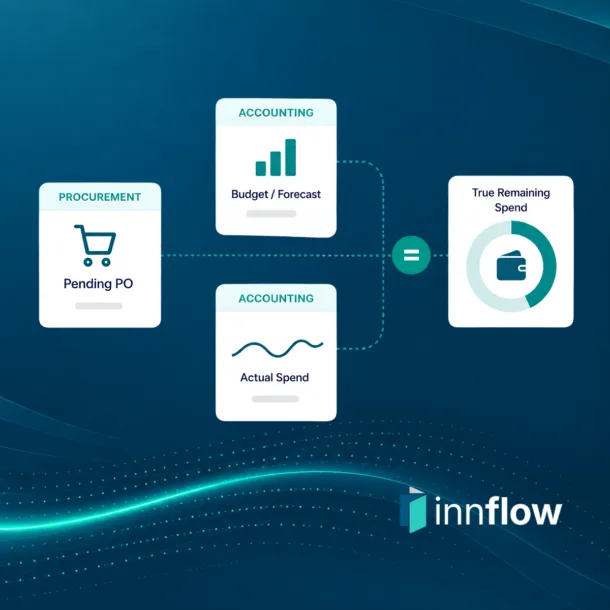
Inn-Flow’s hotel accounting software supports centralized AP processing, standardized GL coding with AI suggestions, configurable approval workflows, and direct integration with the procurement system for three-way matching. These capabilities are built for management companies managing AP across multiple properties.
Learn more at inn-flow.com/accounting.
Frequently Asked Questions
What are the most important hotel accounts payable best practices?
Centralized processing, standardized GL coding, documented approval authority thresholds, enforced invoice cutoff dates, and three-way matching for PO-based purchases are the most impactful. These practices reduce processing cost, prevent errors, and protect against unauthorized payments.
Why should hotel management companies centralize AP processing?
Centralization creates consistent controls across properties, eliminates duplicated effort, and makes portfolio-level AP visibility possible. Digital invoice capture systems allow centralization without requiring physical document transport between properties.
What is three-way matching and why does it matter for hotel AP?
Three-way matching compares the purchase order, receiving record, and vendor invoice. When all three match, payment can proceed efficiently. When they do not, the discrepancy is investigated before payment. This control prevents payment for goods not received and reduces fraud risk.
How do hotel AP teams manage payment terms effectively?
AP teams that track payment terms by vendor can schedule payments to capture early payment discounts and avoid late fees. AP software that generates due-date alerts makes this manageable at the volume typical for hotel management companies.
What is an AP subledger reconciliation and how often should it happen?
AP subledger reconciliation compares the accounts payable subledger balance to the general ledger balance and resolves any discrepancies. It should happen monthly, at every period close, with documented sign-off before the period closes.