Hotel labor costs are the single largest controllable expense category in hotel operations, typically representing 30 to 35 percent of total revenue. Because they are both large and variable, labor cost decisions have a more direct impact on net operating income and owner returns than almost any other operational decision. Understanding how labor costs flow from scheduling decisions to the income statement is essential for hotel management companies.
Key Takeaways
- Labor is typically the largest controllable expense in hotel operations
- A one-percentage-point change in labor cost as a percent of revenue has a direct impact on NOI
- Labor cost leakage occurs in scheduling, overtime, agency reliance, and time and attendance gaps
- Real-time visibility into labor costs enables corrections during the period, not after
- Labor costs must flow into the accounting system to appear accurately in the P&L
- Department-level labor analysis is more actionable than portfolio-level averages
Labor Cost as a Percentage of Revenue
Hotel labor management starts with understanding labor cost as a percentage of revenue. This metric translates workforce deployment decisions into financial language that ownership groups and asset managers can evaluate. When labor cost as a percentage of revenue runs above budget, every additional point represents direct NOI compression. When it runs below budget without service quality decline, every point represents additional return to ownership.
Labor cost percentage varies by department. Rooms labor typically runs lower as a percentage of department revenue than food and beverage, which is more labor-intensive per dollar of revenue generated. Understanding the benchmark for each department is prerequisite to evaluating whether actual performance represents a management issue or a structural one.
How Labor Costs Impact Net Operating Income
NOI is the financial measure that hotel owners and lenders care about most. It is calculated after operating expenses, including labor, and before debt service and capital expenditures. Because labor is the largest variable expense, it has a correspondingly large impact on NOI.
When labor costs run above budget at a property, the impact flows directly to NOI unless offset by revenue upside. This is why management companies that build strong labor cost discipline command higher management fees and earn more renewal contracts: the NOI difference between well-managed and poorly-managed labor is measurable and material.
The relationship is also relevant for asset value. Hotel valuations are typically based on a capitalization rate applied to NOI. Labor cost discipline that improves NOI contributes directly to property value, which is why ownership groups focus on it closely.
Components of Hotel Labor Cost
Hotel labor cost includes more than base wages. Understanding all the components is necessary to manage the total accurately.
- Base wages: The hourly or salaried compensation for scheduled work
- Overtime premiums: The additional cost of hours worked beyond the overtime threshold
- Benefits and employer taxes: Typically adding 20 to 30 percent to base wage cost depending on benefit structure
- Agency and contract labor: Often priced significantly above equivalent direct employment cost
- Bonuses and incentives: Variable compensation tied to performance or attendance
- Managers and supervisors: Salaried labor that is less variable with occupancy than hourly staff
The most controllable components are overtime, agency labor, and scheduling efficiency. Benefits and taxes are largely fixed relative to headcount. Managing the controllable components is where labor cost discipline produces the most financial impact.
Where Labor Cost Leakage Happens
Labor cost leakage refers to the gap between what labor should cost given the occupancy and workload, and what it actually costs. The most common sources of leakage in hotel operations are:
- Scheduling that does not flex with occupancy, resulting in overstaffing on low-demand days
- Overtime incurred because managers do not have real-time visibility into approaching thresholds
- Agency labor used to cover gaps that better forecasting and cross-training could eliminate
- Time and attendance discrepancies that add hours to payroll without adding productive work
- Misclassified labor costs that appear in the wrong department, making analysis less actionable
Each of these sources has an operational solution. Identifying which ones are driving leakage at a specific property requires department-level tracking that connects scheduling data to actual cost outcomes.
Visibility Drives Better Decisions
The reason labor cost leakage persists in many hotel operations is that managers lack real-time visibility into what their department is spending. When the only source of labor cost data is the monthly P&L, problems are identified three to four weeks after they occur. Business intelligence dashboards that surface department-level labor cost daily give managers the information they need to make corrections while there is still time to affect the period’s outcome.
Real-time visibility into labor cost percentage, CPOR, and overtime hours allows managers to adjust scheduling mid-week when demand forecasts change, respond to unexpected occupancy shifts, and prevent overtime before it is incurred rather than explaining it after the fact.
The Labor-Financial Reporting Connection
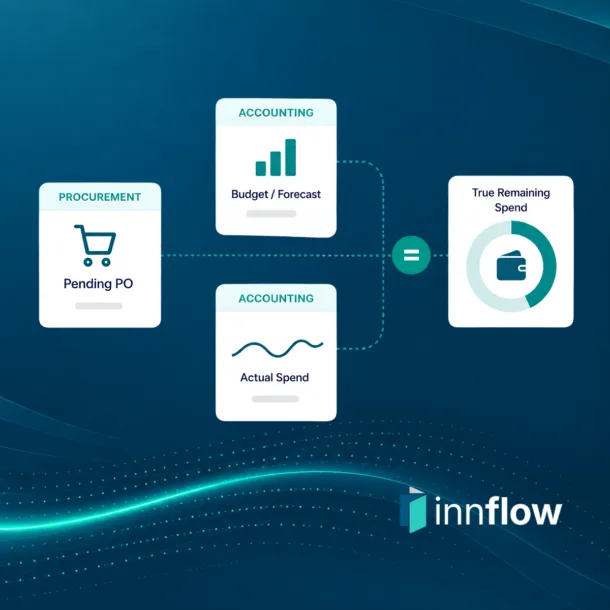
Labor costs that are tracked in a scheduling or time-tracking system but never integrated into the accounting system create a split view of hotel financial performance. Hotel accounting software that receives labor data automatically produces department-level P&Ls that reflect actual labor cost in real time. This integration is the bridge between operational labor management and financial reporting.
Without this integration, the P&L at month-end relies on manual labor cost transfers that are often delayed, estimated, or incomplete. Accruals are approximated rather than calculated. Department variances are explained after the fact rather than corrected during the period. The financial reporting is a post-mortem rather than a management tool.
When labor data flows automatically into accounting, the P&L becomes a live management document. Controllers spend less time on reconciliation and more time on analysis. Ownership groups receive financial reports that match the operational reality they can observe.
Inn-Flow: Connecting Labor and Financial Performance
Inn-Flow integrates hotel labor management directly with hotel accounting software and business intelligence dashboards, giving management companies real-time visibility into labor costs at the department level and across the portfolio. Labor data flows automatically into the P&L, eliminating manual transfers and producing financial reports that reflect operational reality.
Learn more at inn-flow.com/system-overview.
Frequently Asked Questions
What percentage of revenue should hotel labor costs be?
Hotel labor costs typically run 30 to 35 percent of total revenue, though this varies significantly by property type, brand standard, market, and department mix. The more useful benchmark is department-level labor cost percentage compared to budget and prior period at the same property.
How do hotel labor costs affect NOI?
Because labor is the largest variable expense, every percentage point of labor cost directly compresses or expands NOI. Management companies that maintain strong labor cost discipline produce better NOI outcomes, which translates to better owner returns and higher property valuations.
What are the most common sources of hotel labor cost leakage?
The most common sources are occupancy-blind scheduling that overstaffs during low-demand periods, overtime incurred without real-time manager visibility, agency labor used to cover preventable gaps, time and attendance discrepancies, and misclassified labor costs.
How does real-time labor cost visibility help hotel managers?
Real-time visibility allows managers to correct scheduling mid-week when demand forecasts change, prevent overtime before thresholds are crossed, and identify cost anomalies while there is still time to affect the period’s outcome rather than explaining them after month-end.
Why does labor data need to integrate with hotel accounting software?
Without integration, labor costs in the P&L rely on manual transfers that are often delayed or estimated. Integration produces department-level P&Ls that reflect actual labor cost in real time, making the income statement a management tool rather than a historical record.